
Price the build, not just the features.
Estimate discovery, testing and launch, then see what changing requirements do to the margin.
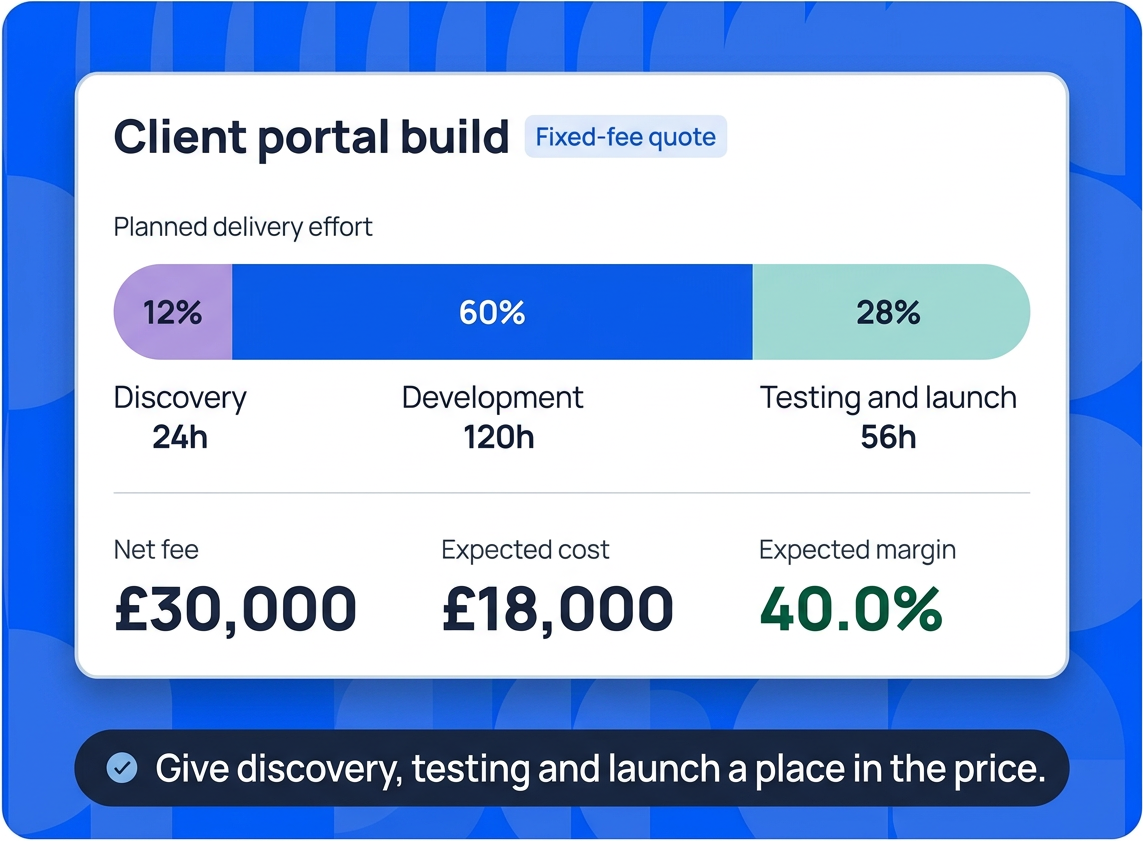
The build includes more than the feature list.
Technical discovery, connecting to the client's existing systems, testing, acceptance and getting the software into use all take team time. The client signs off features. Your margin depends on everything it took to ship them.
Price the work behind the features.
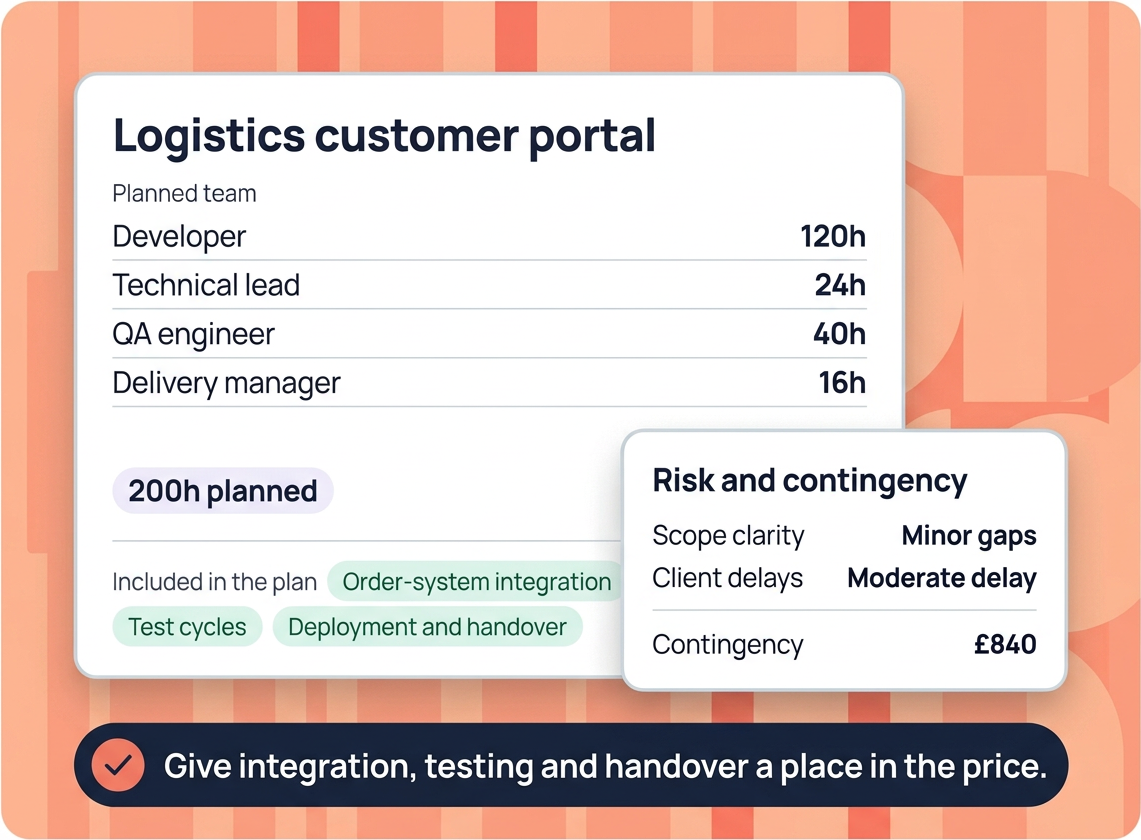
A customer portal for a logistics firm needs to connect to its order system. The build is the visible part; discovery, integration, testing, deployment and handover belong in the estimate too.
- Plan effort across engineers, tech leads, QA and delivery management.
- Add direct delivery costs such as contractors, hosting or licences.
- Plan the integration work, and use contingency for what you can't see yet — like an unfamiliar third-party system.
If the client wants a lower fee, Margin Moves helps you review the fee, scope or approach. Cutting hours doesn't make it achievable.
See a requirement change before you absorb it.
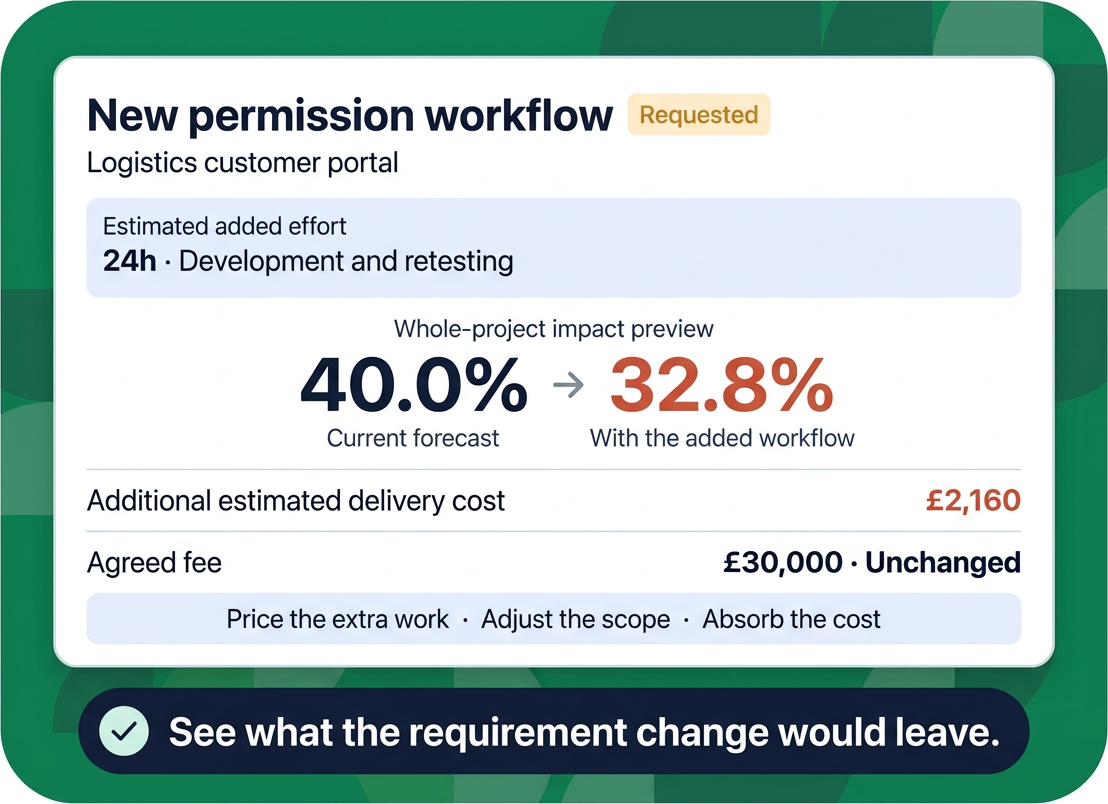
Mid-project, the client asks for a new user-permission workflow. It touches tested work, and your lead developer is committed to another release.
- The agreed fee stays put; the new workflow shows as an addition.
- Capacity shows competing commitments, and recorded time keeps the forecast current.
- Flag the change, then choose to price it, adjust the agreed scope or absorb it knowingly.
Flagging a change doesn't alter the fee or charge the client. The commercial decision stays with you.
Use finished work to strengthen the next estimate.
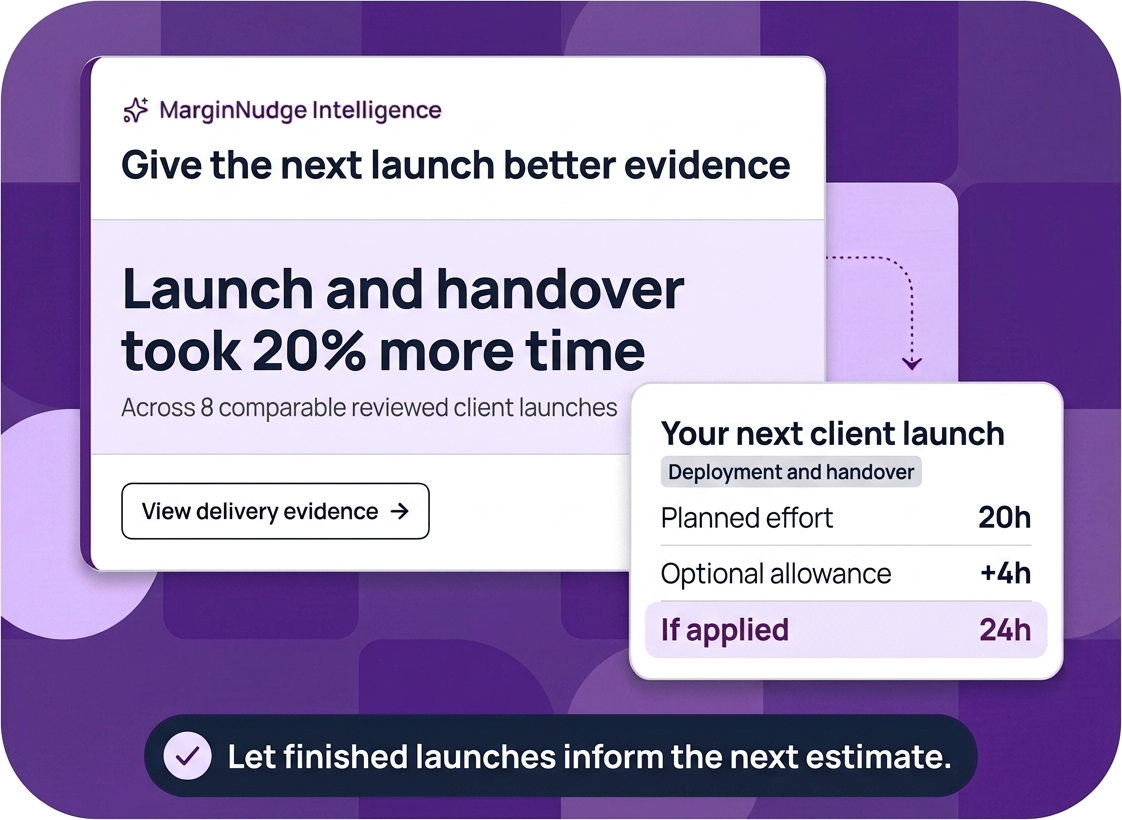
Across comparable client launches, deployment and handover ran longer than planned. Compare planned and recorded effort, and the next estimate can allow for it.
- Compare planned and recorded effort by project, client, service or role.
- See how team time was used, for context on what the numbers mean.
- On eligible plans, use findings from comparable reviewed work as optional quote adjustments.
One difficult build isn't a pattern. Look for consistent differences across comparable work before adjusting the next quote.
Fixed fee, time-based or ongoing.
Each engagement keeps its own commercial basis. MarginNudge sits alongside your engineering tools as the commercial view, and your first quote works without any history.
- Fixed-fee builds
- The estimate carries the delivery risk, so the effort behind it has to be right before you agree the price.
- Time and materials, with or without a cap
- Billing by time doesn't remove delivery risk, and a cap doesn't guarantee the cost is recovered. Check the expected effort against both.
- Ongoing client work
- Support and enhancement work kept tied to what each period includes.
Keep the delivery commitment connected to the agreement.
Estimate the whole build, see what changes along the way and carry the lesson into the next client project.