
Check the margin before the quote leaves the building.
Allow for the people, costs and risks behind the work, then send a fee your team can stand behind.
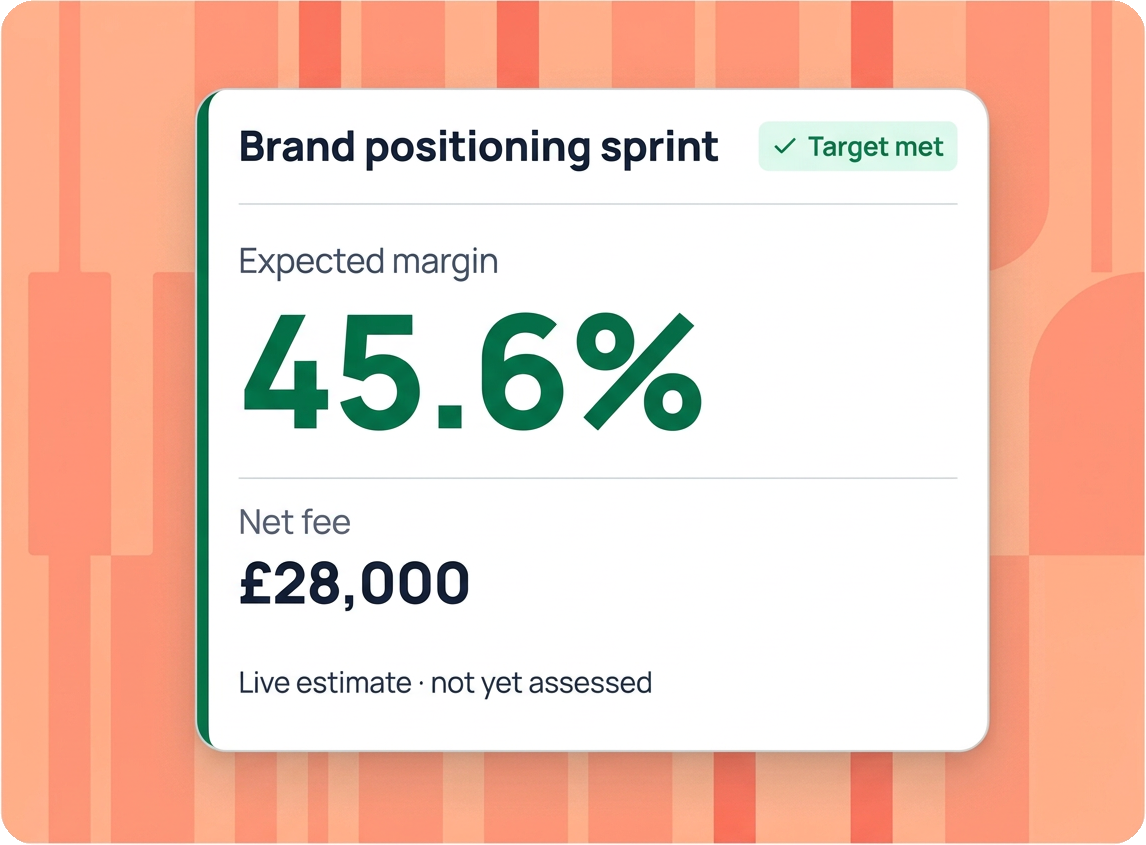
The quote looked fine on the day the client said yes.
The brief listed the deliverables. It didn't list the weekly client calls, the third revision round, the handover pack or the approval that sat with a board for a fortnight. When those stay out of the price, the margin pays for them later.
Give the work behind the brief a place in the price.
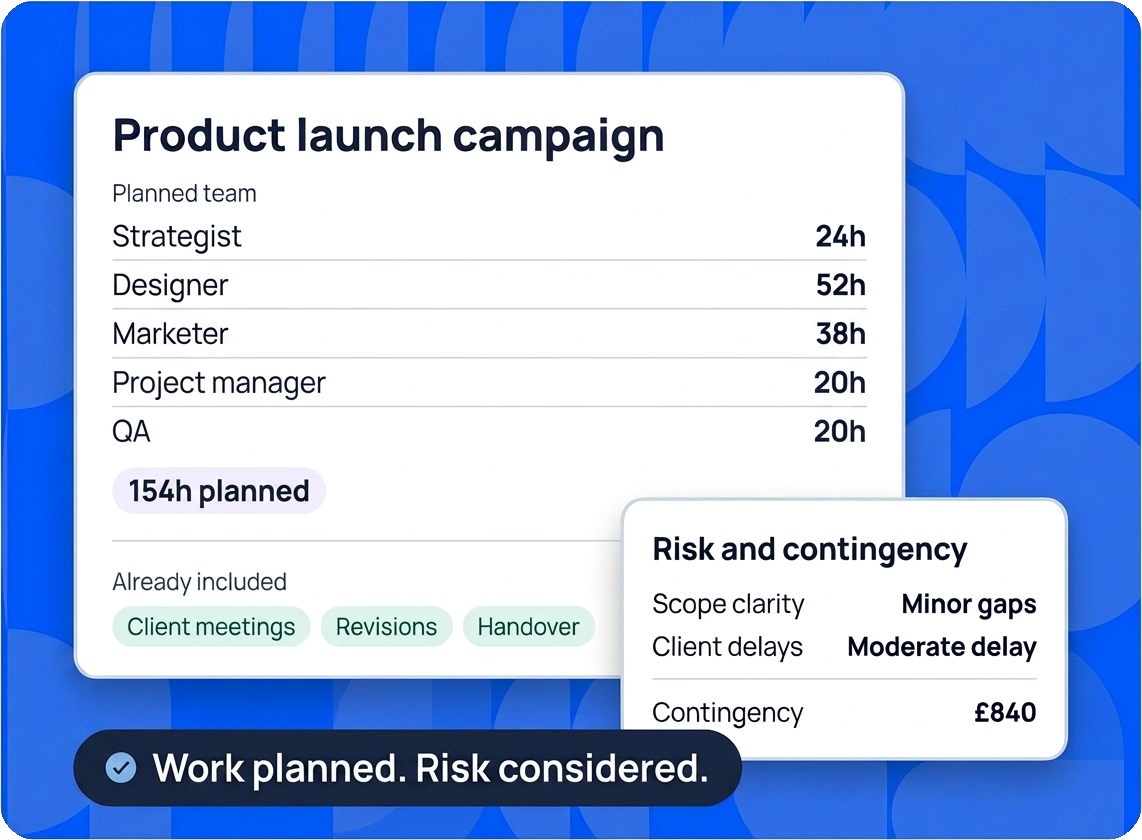
Before you price a product launch campaign, plan it the way it will be delivered. Known work goes into the plan. What you can't yet know gets considered before the terms are agreed.
- Effort by role, with calls, revisions, QA and handover planned in, not hoped for.
- Business costs and direct project costs, such as paid media tools or freelance support, kept separate.
- Risk questions about the client, scope and delivery make your assumptions visible.
Uncertainty gets considered before you commit, not discovered after.
See what a lower fee really changes.
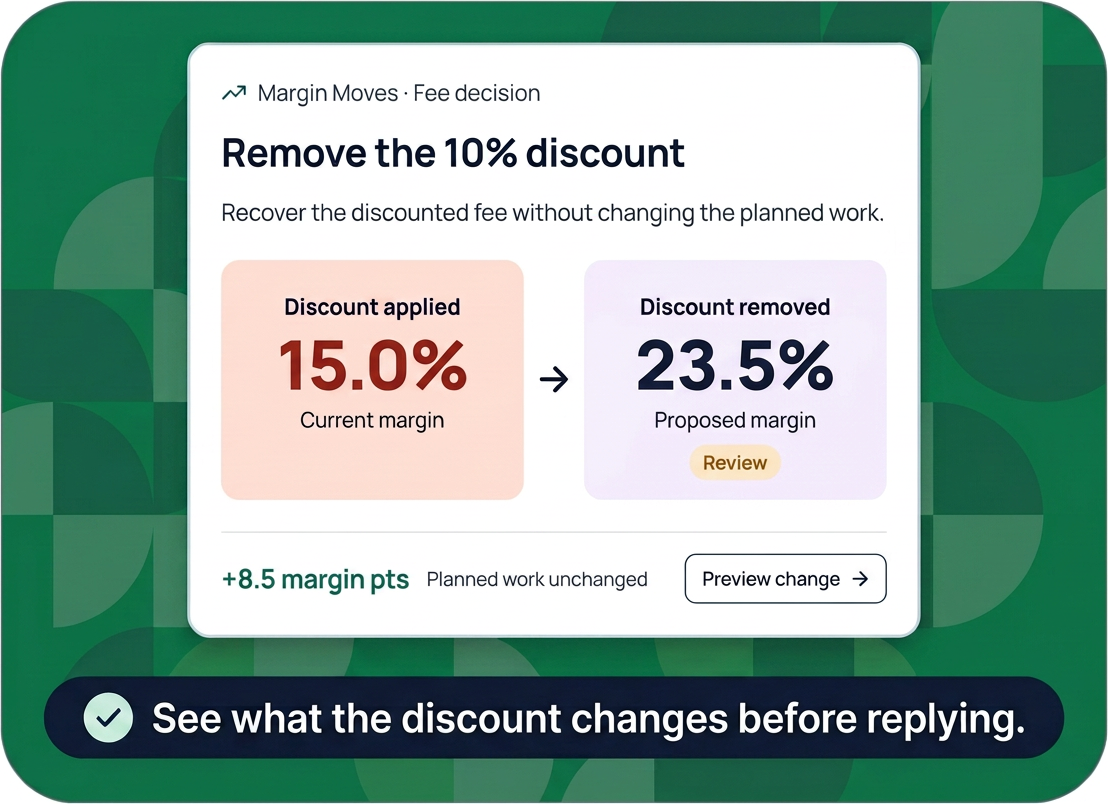
The client asks for 10% off a £14,000 launch campaign. Before you reply, see what that concession leaves, then review a supported alternative.
- Margin Moves suggests alternatives, such as changing scope or role mix. You review them and choose whether to apply one.
- A material change is assessed again on the revised version.
- Check the team has room before you promise the dates.
Agree to a different deal knowing what it gives and takes away.
Let finished work sharpen the next quote.
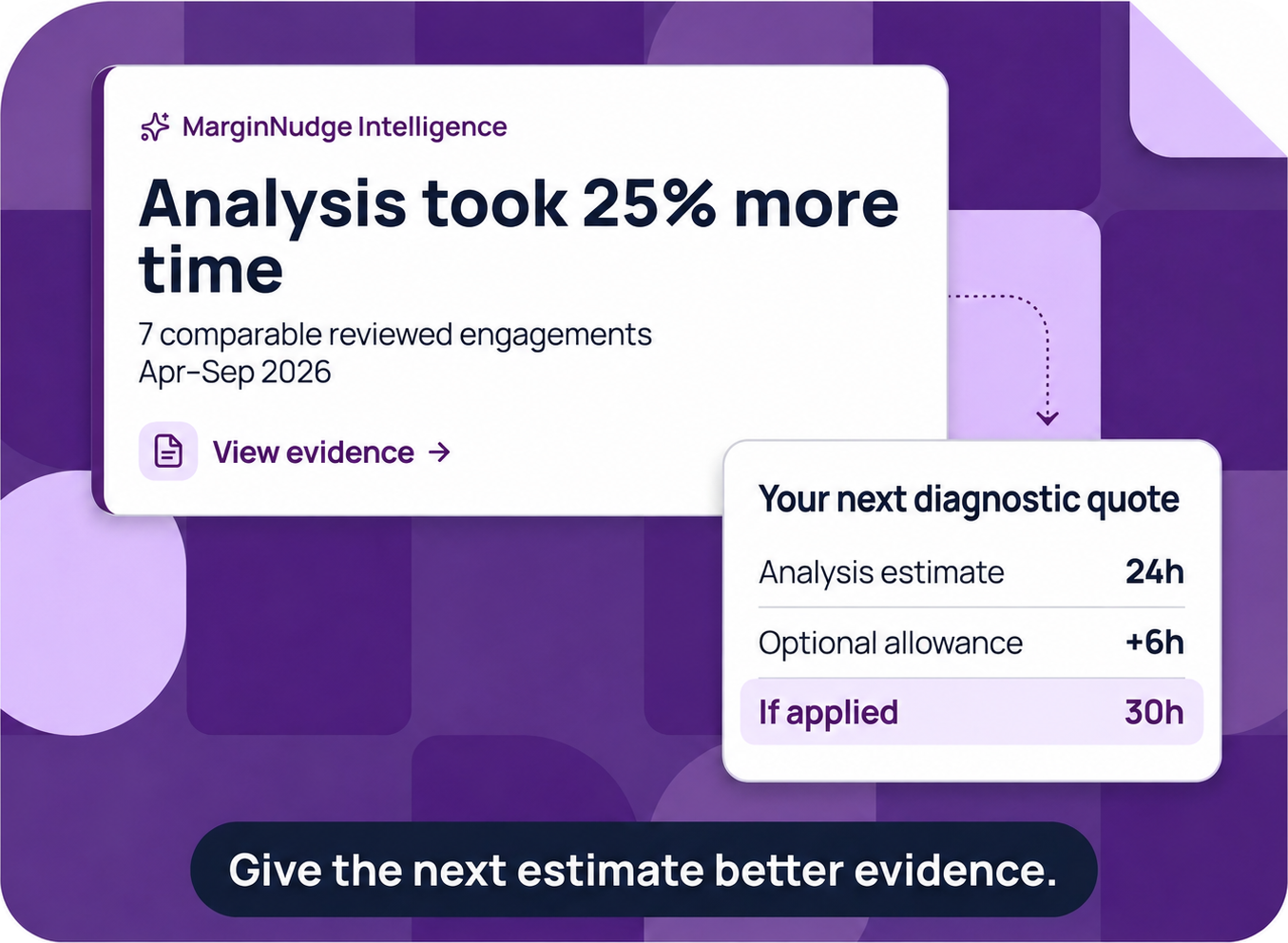
Your first quote is assessed on the work, costs and assumptions you enter. As reviewed projects build up, similar finished work can show where effort ran over.
- Eligible reviewed delivery evidence can support a finding for a similar quote.
- Any allowance it suggests is optional, and separate from your risk contingency.
Each finished job gives the next estimate a better starting point.
Try it on your next quote.
Start your 14-day trialPrice the work the way you sell it.
Fixed fee
One fee for an agreed job.
Monthly retainer
A fee and an allowance for a named period.
Time and materials
Billable time and rates, with a cap where agreed.
Recurring service
A defined unit, quantity and included allowance.
Each model is compared on the period or unit you are selling.
Send the version you checked. Deliver the deal you agreed.
Check the version
The version you send is the one you assessed. Material edits are reassessed, and approvals follow your team’s settings.
Prepare the client-ready quote
The client sees the deliverables and fee. Your internal costs, contingency and margin stay private.
Start delivery from the agreement
An accepted quote becomes a project, with the agreed fee and estimated delivery cost kept separate.
Want to see what happens after the client says yes? See how Delivery works
Quick answers
- Do I need past projects before my first quote?
- No. Your first quote is assessed on the effort, costs and assumptions you enter. Past-work evidence is added when it exists.
- Will MarginNudge set the price for me?
- No. It shows what a fee leaves and suggests options to review. You choose the fee, the scope and when to send.
- Does a quote below target get blocked?
- No. Target is the margin you want. Minimum is a separate limit. A quote under target is flagged for review, and any approval follows your team's own settings.
- Is contingency the same as a past-work allowance?
- No. Contingency comes from your risk answers on this quote. A past-work allowance is an optional addition based on similar finished projects.
Check your next quote before it goes out.
Start with a real piece of client work and see what the fee leaves.