
Keep the margin you planned.
See projects, people and weekly time in one place, and act before the budget runs out.
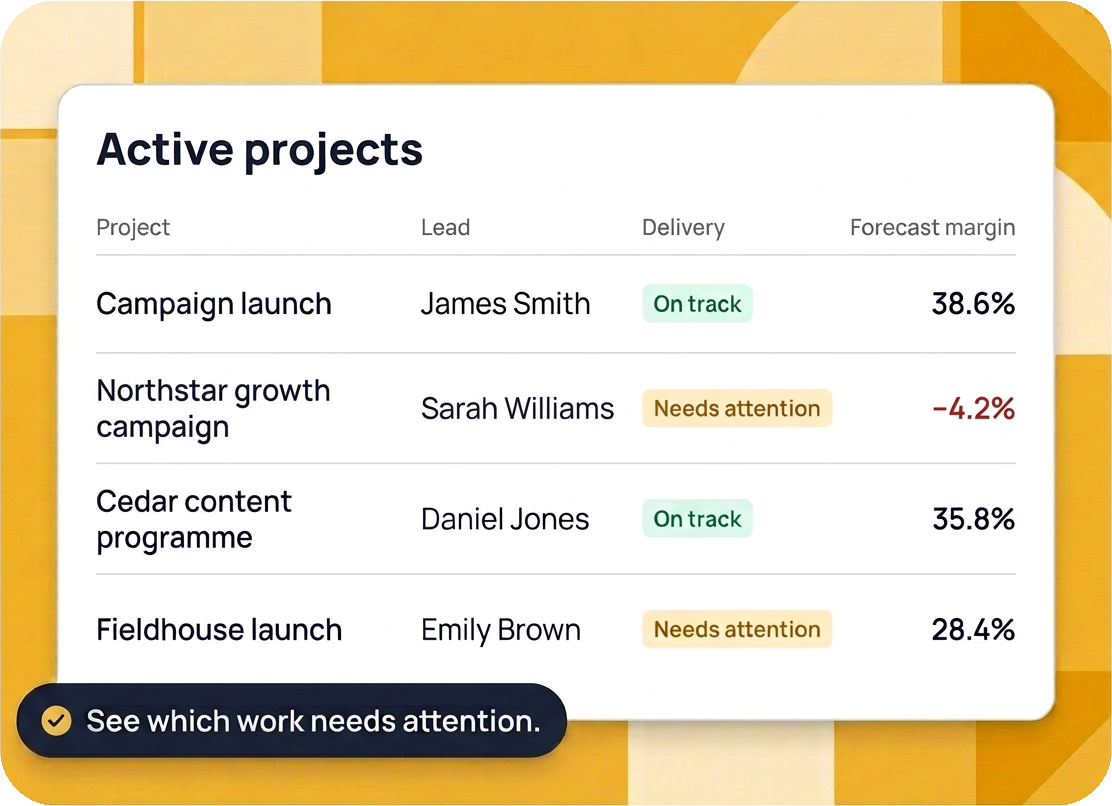
The plan was right. Then the weeks happened.
Hours get recorded late. One designer is booked on three projects. A "small" extra page arrives. By the time anyone looks, the margin has already slipped.
Start every project from a clear plan.
When a client accepts a quote, the agreed hours and budget become the project. Work that began elsewhere can join too.
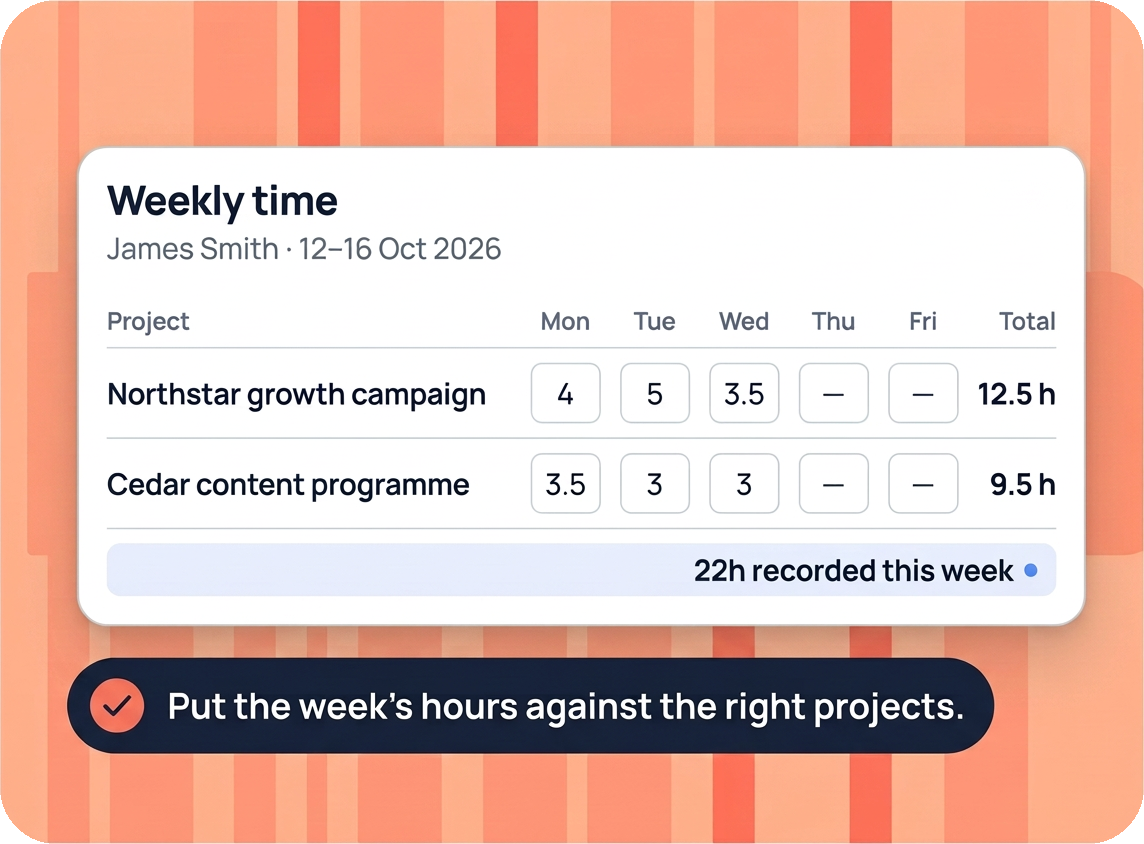
- Tasks carry an assignee, due date, status, planned and remaining hours.
- Switch between list and board views, and each person sees their own work.
- Bring in a live project without inventing a quote it never had.
Every project starts from what was agreed, not from memory.
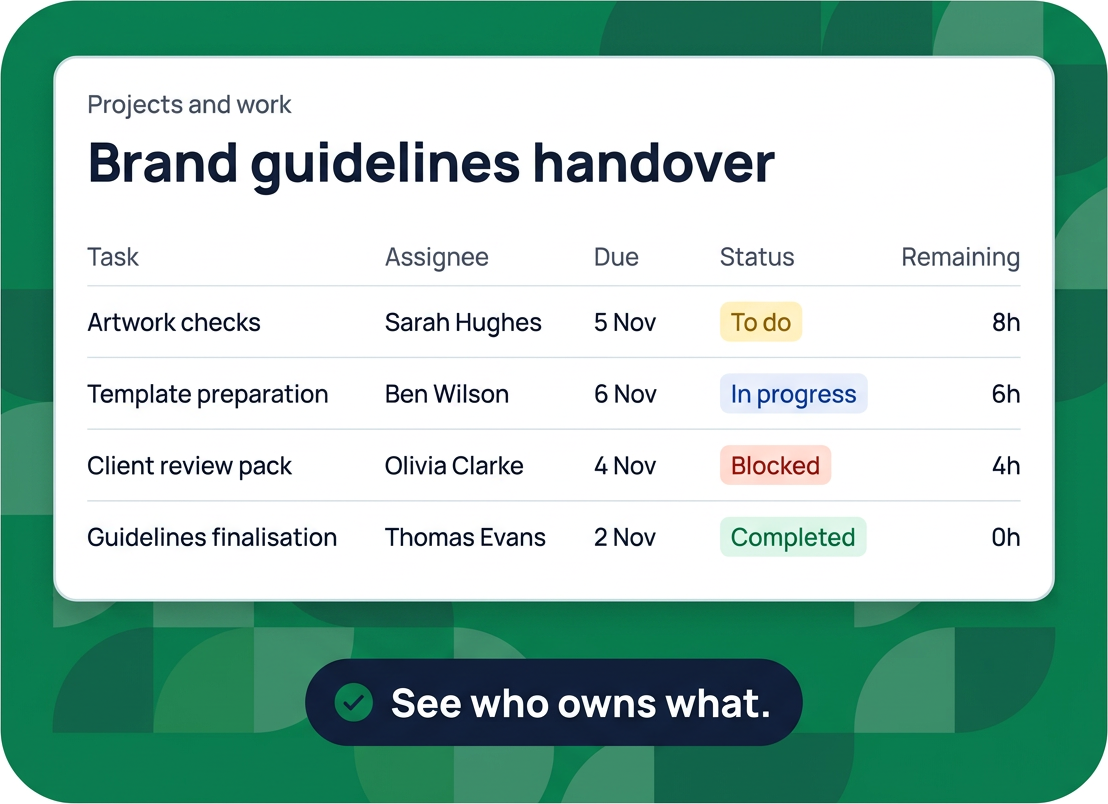
Check capacity before promising a deadline.
Compare the time each person has available with what is already planned for them, across every client.
- See competing project demands for the same person in one view.
- Allocations that exceed availability are flagged for review.
- Move, reschedule or reassign before the week becomes a problem.
Spot the clash before it becomes a missed deadline.
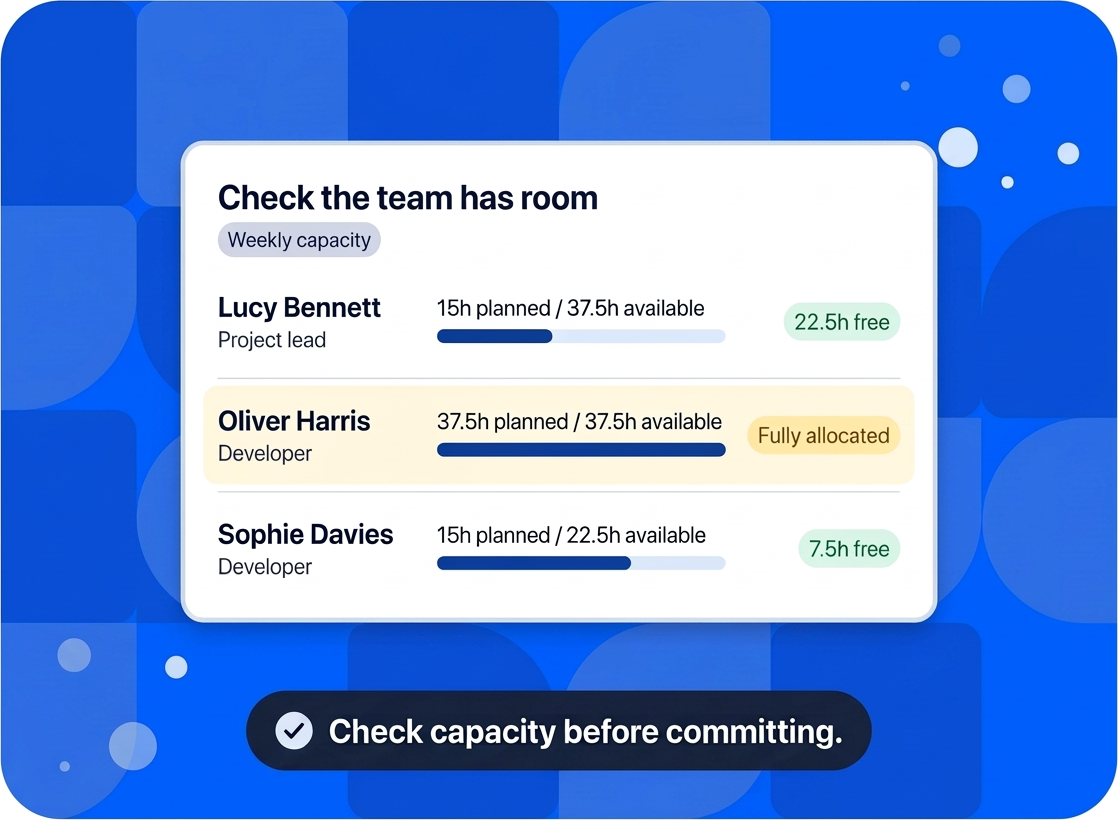
Put the week’s hours against the work they belong to.
Recorded time shows effort used. Remaining effort is the team’s estimate of what is still needed. Together they update the forecast.
- Copywriting planned at 30h: 18h recorded, 16h remaining.
- The forecast is now 34h, 4h above plan, so margin health moves to review.
- Earlier effort stays on the rates that applied when it happened.
A forecast is an estimate built on the time and remaining effort entered, not a guaranteed result.
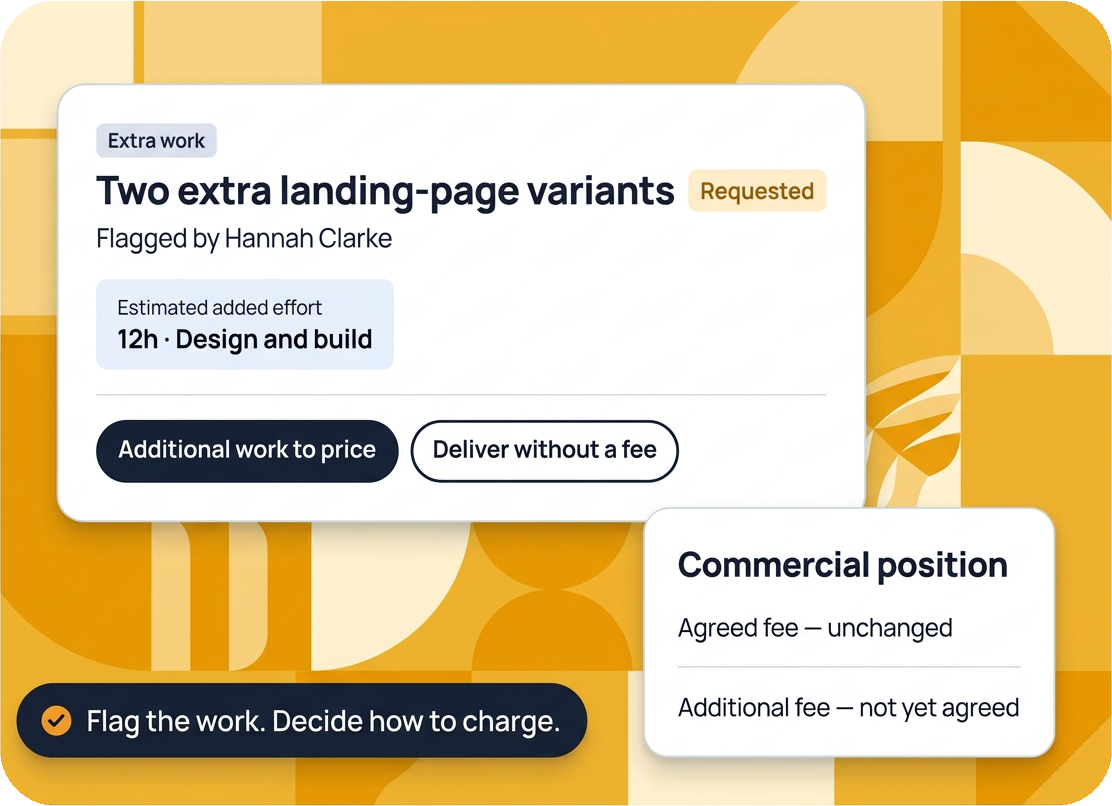
One more landing page? Decide how it’s treated.
Record the request and its estimated cost. The request alone doesn’t change the agreed fee. Only an accepted paid change does.
- Estimated added cost: £900 for design and build.
- Price it as a linked change quote, adjust scope, or absorb it knowingly.
- Absorbed work stays visible as uncharged scope in the result.
Extra work gets a decision, not a shrug.
Try it on a live project.
Start your 14-day trialBring in work however it began.
From an accepted quote
The agreed fee, hours and estimated cost carry straight into the project.
Standalone project
Start from a documented opening plan when there was no quote.
Already underway
Record the opening position and remaining effort for live work.
Recurring work
Track each period against its agreed allowance.
Keep the record accurate all the way to close.
Record the week
Time goes against the tasks it belongs to, alongside the remaining-effort estimate.
Review and correct time
Managers check submitted time. Earlier effort keeps the rates that applied when it happened.
Close on a reconciled result
Final revenue, hours and costs are reviewed before the result informs future quotes.
Want to see what finished projects teach the next quote? See how Insights & Reports works
Quick answers
- Do I need to quote in MarginNudge first?
- No. Standalone projects and work already underway can start from an opening plan or opening position.
- Does an extra-work request change the agreed fee?
- No. Only an accepted paid change increases the commercial baseline. Absorbed work stays visible as uncharged scope.
- Is the margin forecast guaranteed?
- No. It's an estimate based on the time recorded and the remaining effort your team enters.
- Do rate changes rewrite past costs?
- No. Historical costing keeps earlier effort on the rates that applied at the time.
Know what the work is likely to leave while you can still act.
Start with a live project and see what the work is likely to leave.